When it’s time to repair or replace your roof, step one is hiring the right roofing contractor. Choosing a contractor you shouldn’t have usually leads to more problems than solutions. From poor workmanship to roofing scams, a bad decision here can cost you thousands, not to mention risk your home’s safety.
In this guide, we’ll walk you through what to avoid when hiring a roofing contractor, highlight red flags to watch out for, and explain how to make a confident, informed choice. Whether you’re dealing with damaged shingles, leaking gutters, or planning a full roof replacement, this is need-to-know information.
Common Red Flags When Hiring a Roofer
Hiring a roofer isn’t something most people do often, so it’s easy to overlook red flags. Here’s what to be cautious of:
High-Pressure Sales Tactics
If someone is pushing you to make a fast decision—especially offering “today only” discounts—it’s a red flag. Reputable contractors don’t rush clients into contracts. High-pressure sales are often a hallmark of less trustworthy companies, particularly storm chasers who follow severe weather events looking to make a quick profit.
Lack of License, Bond, or Insurance
In Washington State, all roofing contractors must be licensed, bonded, and insured. If your contractor can’t provide up-to-date credentials or proof of liability and workers’ comp insurance, walk away. Without these protections, you could be on the hook for accidents or improperly installed work that fails prematurely.
Vague Estimates or Verbal Agreements
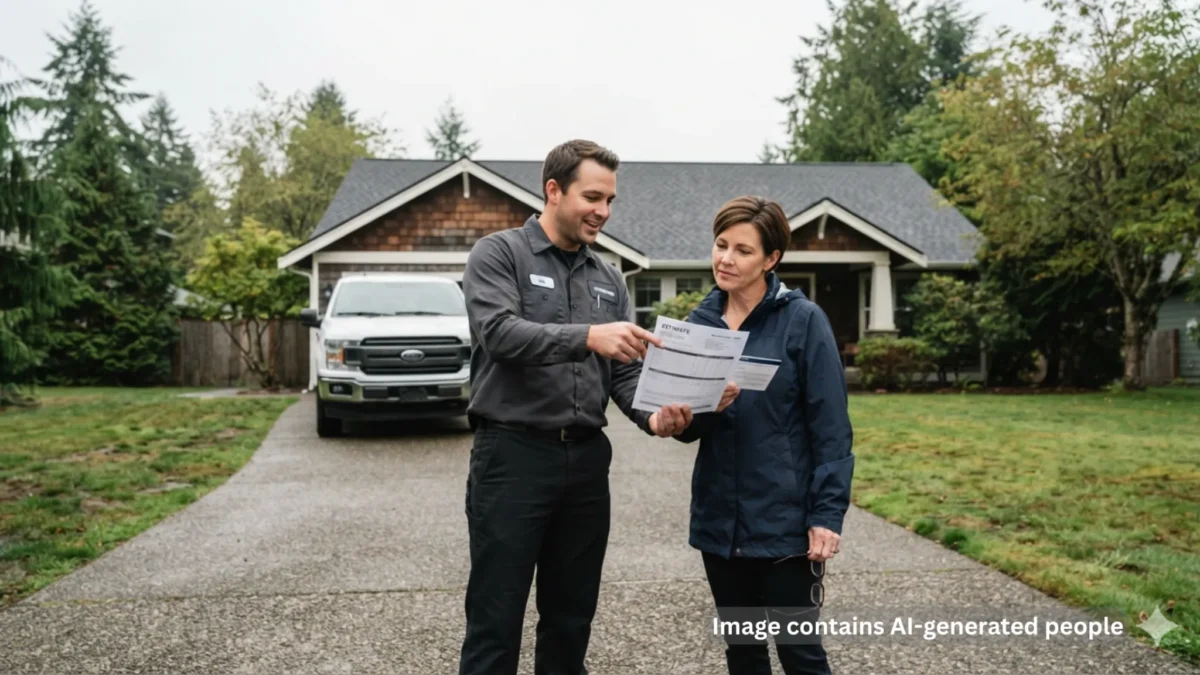
Always insist on a detailed, written estimate. If a contractor only provides vague pricing or refuses to put things in writing, they may later pad the bill. Every material, labor charge, and timeline should be clearly itemized. Avoiding this can lead to inflated costs and disputes down the road.
How to Know If You’re Being Ripped Off
Unexpected Material Upcharges
Be wary if you start hearing that the cost of materials has suddenly gone up after the contract is signed. Some shady contractors exploit customers who aren’t familiar with material pricing and charge well over the market rate.
Labor Charges That Don’t Match the Crew
If the work is quoted for a professional team but a couple of subcontractors show up instead, question it. A legitimate company should tell you exactly who will perform the work and what’s included in their rate.
Unnecessary Upgrades
If your contractor suggests replacing parts of your roof that seem fine, like decking or gutters, without showing clear evidence of why they need to be replaced, ask for documentation. These could be upsells designed to inflate the job cost.
Signs of a Bad Roofing Job
Visible Installation Flaws
Poor alignment, lifted shingles, exposed nails, and incomplete flashing are just some of the signs of a bad roofing job. If you can see mistakes from the ground, there are likely more serious issues you can’t see.
Recurring Water Leaks
If leaks appear soon after a roof installation or repair, it’s likely due to improper installation or skipped steps in sealing and underlayment. Leaks can damage insulation, drywall, and framing, and often void warranties if installation guidelines weren’t followed.
Warranty Issues
Cutting corners during installation can void your roof warranty. Manufacturers require specific installation standards. If a contractor doesn’t follow them, the warranty becomes worthless even if the materials were top-tier.
How to Spot a Dishonest Roofer
Lowball Estimates That Don’t Add Up
Too-good-to-be-true pricing is usually just that. Low bids often mean the contractor plans to cut corners, use subpar materials, or charge unexpected fees once the project begins.
No Physical Address or Website
A legitimate roofer should have a local office and a website listing their services, license number, and references. A P.O. box or missing contact info is a major red flag.
Inconsistent Information
If a contractor contradicts themselves or avoids answering direct questions about timelines, methods, or materials, trust your instincts and move on.
Vetting a Roofer
Verify Licensing and Insurance
Ask for proof, and then verify it through Washington’s Department of Labor & Industries (L&I) website. Don’t take their word for it.
Request Local References
Always ask for at least three recent local references and follow up. Look at online reviews and third-party sites, not just testimonials on their website.
Review the Contract Carefully
Ensure everything, from scope to cleanup, is detailed in writing. Look for:
- Payment schedule
- Estimated timeline
- Clean-up and disposal commitments
- Material types and brands
- Workmanship and manufacturer warranties
Can You Negotiate with Roofing Contractors?
Yes, especially during off-peak seasons. Many contractors offer more flexible pricing if you’re willing to wait or bundle services like roof cleaning and gutter repair. However, never trade price for quality. If a roofer won’t budge on price but offers outstanding work, it’s often worth it.
What to Look for During Negotiation
Ask about seasonal discounts, bundle services (e.g. roof + gutter work), flexibility on project timing, and material options that may lower costs. Remember, roofing projects aren’t cut and dry like buying a piece of furniture; there are a lot of moving parts that can be shuffled around to suit your needs.
Mistakes That Can Void a Roofing Contract
Changing Scope Without a Signed Addendum
If you ask for additional work or materials, get it in writing. Verbal changes won’t hold up if something goes wrong.
Neglecting Roof Maintenance
Letting moss, debris, or standing water build up, especially without scheduled cleaning, can void your roof warranty. In western Washington, where wet conditions are frequent, regular maintenance is essential.
Pressure Washing Your Roof
Avoid high-pressure washing, which can damage asphalt shingles and reduce their lifespan. Use soft washing techniques, or hire a qualified contractor like Lacey Roofing for regular cleaning.
Next Steps
Hiring a roofer is a decision that can affect your home or business’ safety, value, and budget. By being informed and cautious, you can avoid a bad roofing experience and protect yourself from roofing scams, insurance fraud, and common mistakes that cost a fortune.
Here’s what you should do next:
- Inspect your roof for visible damage or signs of aging (look for curled, missing, or damaged shingles).
- If repairs or replacements are needed, get at least three estimates from licensed local contractors.
- Ask detailed questions. Use this article as your checklist.
- Contact a reputable, family-owned local company that prioritizes customer satisfaction and transparency.
Western Washington Chooses Lacey Roofing
Since 1979, Lacey Roofing has provided reliable, high-quality roofing services across Western Washington. We’re family-owned, locally operated, and committed to your peace of mind. Our team is fully licensed, bonded, and insured, and every roof we install is done right.
Whether you need a simple roof cleaning, leak repair, or a full roof replacement, we’re here to help you navigate the process with confidence.
Need help with your roof?
Reach out to Lacey Roofing today for a no-pressure estimate and expert advice tailored to your needs. Let’s make sure your roof is one less thing to worry about.