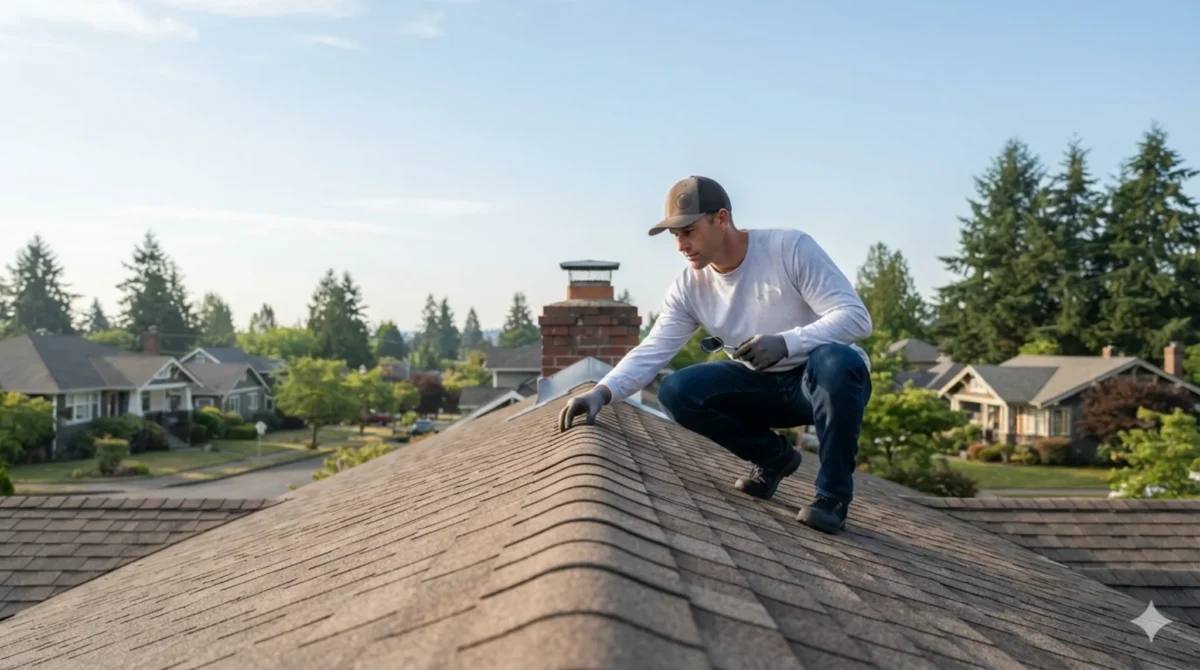
Summer is one of those seasons when the roof is easy to forget. The skies are clear, the gutters aren’t overflowing, and the only water coming in is through the windows you opened on purpose. Everything seems fine.
If you’ve lived in the Pacific Northwest for more than a season or two, you know the look. That soft, creeping green spreading across your neighbor’s roof. The dark streaks running down shingles like someone forgot to clean up after a storm. Maybe you’ve noticed it on your own home and told yourself you’d deal with it later.
Here’s the thing: moss and algae on a PNW roof aren’t a “later” kind of problem. They’re patient, quiet, and remarkably good at causing damage long before you realize anything is wrong. Understanding what you’re actually dealing with—and why the Pacific Northwest makes it so much worse than most other regions—can save you from a much bigger headache down the road.
Moss and Algae: Not the Same Problem
Most homeowners use the terms interchangeably, but moss and algae behave very differently on your roof, and knowing the difference helps you respond the right way.
What Moss Actually Is
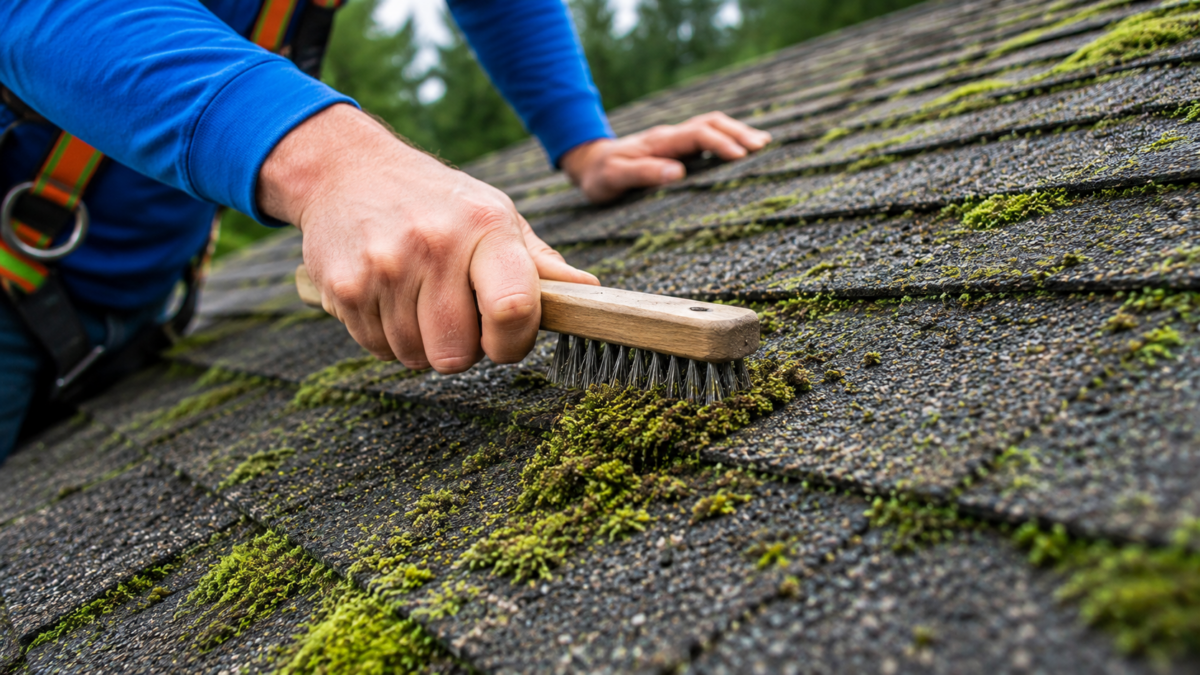
Moss is a living plant. It grows in dense, sponge-like mats and puts down root-like structures called rhizoids that anchor directly into roofing materials. It thrives in shaded, damp areas and loves north-facing roof slopes where sunlight rarely reaches. Once established, a moss colony holds moisture like a wet sponge pressed against your shingles—24 hours a day, 7 days a week.
What Algae Looks Like (and Why It’s Easy to Dismiss)
Algae, by contrast, doesn’t have roots. It typically shows up as dark brown or black streaks—the kind of discoloration many homeowners mistake for dirt or soot. The most common culprit in the PNW is Gloeocapsa magma, a type of cyanobacteria that feeds on the limestone filler in asphalt shingles. It doesn’t burrow in the way moss does, but it does degrade your shingles over time and creates the damp surface conditions that allow moss to take hold afterward.
Think of algae as the advance team. Moss is what moves in once the groundwork is laid.
A Quick Side-by-Side
Moss
Algae
Appearance
Green, thick, spongy mats
Dark brown or black streaks
Root structure
Yes—penetrates shingles
No—surface growth only
Primary damage
Moisture retention, physical lifting
Shingle degradation, aesthetic damage
PNW prevalence
Extremely high
High, especially on older roofs
Spreads via
Spores carried by wind and birds
Airborne spores
Why the PNW Is Ground Zero for Roof Moss
If you’ve ever wondered why moss seems so much more aggressive here than in other parts of the country, the answer comes down to a perfect storm of conditions that your roof has to endure year after year.
Rainfall That Doesn’t Quit
Western Washington averages well over 50 inches of rainfall annually in many areas. That’s not just a lot of water—it’s consistent, sustained moisture that keeps roofing surfaces damp for extended periods. Unlike regions where rain comes in bursts followed by dry spells, the PNW delivers slow, persistent precipitation that gives moss exactly the conditions it needs to establish and spread.
Shade From Tree Cover
Much of the PNW is canopied. Tall conifers, maples, and alders shade homes for most of the day, which dramatically slows the drying time on roof surfaces. A roof that might dry out within an hour after rain in Arizona could stay damp for the better part of a day in Lacey or Olympia. That extended dampness is exactly what moss feeds on.
Mild Temperatures Year-Round
Moss doesn’t need summer heat to grow—in fact, it prefers cooler conditions. The PNW’s mild, temperate climate means moss has a much longer active growing season than it would in regions with harsh winters or hot summers that effectively kill it off. Here, it grows nearly year-round.
Organic Debris on the Roof
Pine needles, leaf litter, and seed pods accumulate in roof valleys, along ridgelines, and in gutters. That organic debris traps moisture and provides a nutrient-rich base for moss to take root. Homes surrounded by mature trees are especially vulnerable, and if your gutters aren’t being maintained regularly, that debris problem compounds quickly.
Does Moss Actually Damage Your Roof, or Is It Just Cosmetic?
This is the question we hear most often, and the answer is clear: moss causes real structural damage. It is not a cosmetic issue.
How Moss Destroys Shingles From the Inside Out
Here’s the sequence that plays out when moss goes untreated on a PNW roof:
Moss establishes a foothold in the granules of your asphalt shingles
Its rhizoids (root-like structures) begin working into the shingle material
As the moss absorbs and holds moisture, the shingle beneath stays perpetually wet
That constant moisture accelerates granule loss, which is the protective layer that shields your shingles from UV rays and weathering
The shingle becomes brittle, begins to curl at the edges, and eventually cracks
Once shingles start curling, you’re one heavy rain event away from a leak.
The Freeze-Thaw Cycle Makes It Worse
In areas where temperatures dip below freezing—even occasionally—moss makes the freeze-thaw cycle significantly more damaging. Moss holds water in its spongy structure. When that water freezes, it expands. That expansion happens inside and beneath your shingles, physically forcing them apart. Over multiple freeze-thaw cycles, even newer shingles can develop cracks and gaps that allow water intrusion.
Moss Adds Weight
This one surprises a lot of homeowners. Thick, saturated moss mats can add meaningful weight to sections of a roof. Over time, that added load stresses the decking and underlying structure in ways that weren’t part of the original design. It’s rare that moss alone causes structural failure, but it contributes to a cumulative strain that shortens the life of everything beneath it.
What Happens If You Ignore Moss Long-Term?
The consequences of untreated moss aren’t dramatic overnight—they’re gradual, quiet, and expensive. Here’s what the timeline often looks like for homeowners who put it off.
Year One to Two: Surface Damage Begins
Moss is still relatively shallow. Granule loss begins on the affected shingles. Algae streaks may appear nearby. The damage is real but not yet severe. This is the easiest and least expensive point to intervene.
Year Three to Five: Moisture Infiltration
By now, moss has established deep root systems into shingle material. Shingles in affected areas show visible curling or lifting. Water is likely seeping beneath the shingles during heavy rain. Interior moisture damage—staining on ceilings or in attic insulation—may start to appear.
Year Five and Beyond: Structural and Financial Consequences
Prolonged moisture intrusion reaches the roof deck, underlayment, and potentially framing. What began as a moss problem now involves rotted decking, compromised insulation, and potentially mold. At this stage, you’re not looking at a cleaning or repair—you’re looking at partial or full roof replacement. The cost difference between early intervention and late-stage remediation can be tens of thousands of dollars.
A Note on Insurance
Some homeowners’ insurance policies include exclusions for damage caused by neglected maintenance. Moss-related water damage that could have been prevented through regular roof care may not be covered. If you’re unsure about your policy, it’s worth a conversation with your provider before a problem develops.
North-Facing Slopes: The First Place to Look
If you want to spot moss early, start by looking at the north-facing slopes of your roof. Because they receive the least direct sunlight, they stay damp the longest and are almost always where moss establishes first. By the time moss is visible on southern slopes, the north side is often well into active growth.
Other high-risk areas include:
Roof valleys, where debris and water collect
Areas beneath overhanging branches, which block sunlight and drop organic matter
Around chimneys and skylights, where debris gathers and flashing creates small moisture traps
Low-slope roof sections, where water drains more slowly
How Fast Does Moss Spread?
Faster than most people expect. Moss reproduces through spores that travel via wind, rain runoff, and birds. A small patch on one section of your roof can spread across adjacent areas within a single wet season. Once it crosses a ridgeline and gets onto a previously clean slope, the growth accelerates because it now has new, undamaged shingle material to colonize.
This is part of why the PNW roofing rule of thumb is simple: if you can see moss from the ground, it’s already been growing for a while.
Algae’s Long Game: Setting the Table for Moss
Algae often flies under the radar because it doesn’t have the dramatic, visible presence of a moss mat. But its role in long-term roof deterioration shouldn’t be underestimated.
What Algae Does to Your Shingles
Gloeocapsa magma feeds on the calcium carbonate (limestone) in your asphalt shingles. As it consumes that material, the structural integrity of the shingle gradually weakens. The dark pigmentation it produces—the streaks you see running down roof surfaces—is actually a protective coating the algae secretes to shield itself from UV rays. Your roof ends up absorbing more heat as a result, which can affect energy efficiency inside your home.
Why Algae Invites Moss
Algae creates a biofilm on your shingles—a thin, organic layer that retains moisture and provides a nutrient-rich surface. That biofilm is essentially a welcome mat for moss spores. Roofs that develop algae streaks and go untreated frequently develop moss colonies within a season or two. Addressing algae early is one of the most effective ways to prevent a moss problem from developing at all.
Preventing Moss and Algae Before They Start
The most cost-effective approach to moss and algae on a PNW roof is prevention. A few practices make a meaningful difference.
Trim Overhanging Branches
Reducing tree coverage over your roof increases sunlight exposure and improves airflow—two of the most effective natural deterrents to moss growth. Even trimming back branches by a few feet can reduce how long your roof stays damp after rainfall.
Keep Gutters Clean
Debris-clogged gutters cause water to back up along the roofline, keeping the edges of your roof wet for extended periods. Regular gutter cleaning removes the organic material that feeds moss and helps water drain the way it’s supposed to.
Zinc or Copper Strips
Zinc and copper are toxic to moss and algae. Installing thin strips along the ridgeline of your roof allows rainwater to carry trace amounts of the metal down the surface each time it rains, creating an inhospitable environment for growth. It’s not a permanent solution on its own, but it’s an effective supplemental measure.
Algae-Resistant Shingles
If you’re approaching a roof replacement, ask about shingles that are manufactured with copper granules embedded in the material. These are specifically designed to inhibit algae growth and carry performance ratings for the Pacific Northwest climate.
Regular Roof Inspections
Annual or bi-annual roof inspections catch early-stage moss and algae growth before it becomes a remediation project. A qualified roofer can identify problem areas, check flashing, and give you an honest assessment of where your roof stands—without the pressure of waiting until something goes wrong.
The Right Way to Remove Moss (and What to Avoid)
When moss is already present, removal needs to be done carefully. Done wrong, it can cause as much damage as the moss itself.
What Works
Soft washing—using low-pressure water combined with a moss-killing treatment—is the safest and most effective removal method for asphalt shingles. The treatment kills the moss at the root, and the gentle rinse removes surface growth without dislodging granules.
What to Avoid
Pressure washing is a common DIY approach that typically causes more harm than good. High-pressure water blasts away the granule layer that protects your shingles from UV damage, effectively aging your roof years in a single afternoon. Stiff scrubbing and metal tools have a similar effect. If someone quotes you a pressure wash for moss removal, that’s worth a second opinion.
Timing Matters
The best time to treat moss is in late fall or early spring, before the peak growing season. Treating in dry weather allows the product to penetrate the moss more effectively before rain washes it away.
Thinking About the Long Game
A roof in the Pacific Northwest is working harder than most. It contends with more rainfall, more shade, more organic debris, and more sustained moisture than roofs in most other climates. Moss and algae aren’t inevitable problems—they’re manageable ones, as long as you stay ahead of them.
The homeowners who get the most years out of their roofs in this region aren’t the ones who react when something goes wrong. They’re the ones who stay proactive: keeping gutters clean, trimming trees, scheduling inspections, and addressing growth early when it’s still inexpensive to handle. That kind of consistent attention is what separates a 20-year roof from one that needs replacement at 12.
If you’re not sure where your roof stands, a professional inspection is the most useful first step you can take.
About Lacey Roofing
Lacey Roofing has been serving local homeowners and business owners since 1979. As a family-owned, locally operated company, we take pride in doing things right the first time—every time. Whether you need a roof inspection, moss treatment, gutter service, or a full replacement, our team brings the knowledge, punctuality, and genuine care that our neighbors in this community deserve. Roofing services you can rely on. Our reputation is watertight. Your roof done right, guaranteed. Reach out today—we’d love to help.
Experiencing a roof leak during heavy rain can be stressful, especially in Western Washington where storms can last for hours or even days. What begins as a small ceiling leak can quickly turn into widespread water damage if the situation is not handled properly. Knowing how to respond in the moment, what risks to watch for, and what steps to take next can make a meaningful difference in protecting your home, your belongings, and the people inside it. This guide walks through what homeowners should know, what actions to take, and when it is time to call a professional.
Immediate Actions to Take When You Notice a Roof Leak
When water starts entering your home, your first priority should be safety and damage control. Children and pets should be moved away from the affected area as soon as possible. Water and electricity do not mix, so if the leak is near light fixtures, outlets, or appliances, turning off power to that area of the home is a smart precaution.
Containing the water helps limit the spread of damage. Buckets, towels, and plastic sheeting can be used to catch dripping water and protect floors. Furniture, electronics, rugs, and any outdoor furniture stored indoors should be moved out of the damaged area if it can be done safely. Acting quickly matters because water does not stay confined to one visible spot. It can travel along framing, soak into insulation, and spread behind walls before signs appear inside the home.
Is It Safe to Stay in the House During a Roof Leak?
In many situations, it is safe to remain in the home while managing a roof leak, but there are clear warning signs that should not be ignored. Water near electrical systems, large amounts of water pooling overhead, or ceilings that appear to be sagging increase the risk of injury and structural failure.
If a ceiling shows signs of bulging or cracking, that can indicate trapped water and the potential for collapse. In those cases, it is safer to stay out of the room entirely. Severe storm damage or leaks affecting major structural areas may require temporarily leaving the home. Smaller, controlled leaks that are isolated and actively managed are often safe to monitor, as long as conditions do not worsen.
Common Reasons Roofs Leak Only During Heavy Rain
Some roofs only leak during intense storms, which can make problems difficult to detect ahead of time. Wind-driven rain can force water under shingles or into seams that remain dry during light rainfall. Flashing around chimneys, vents, skylights, and wall intersections is another common weak point. When flashing ages, loosens, or corrodes, heavy rain exposes those vulnerabilities.
Gutter issues also play a major role. When gutters are clogged or damaged, water can overflow and back up beneath roofing materials. Over time, this leads to roof damage that only becomes apparent during prolonged or heavy rain events.
How to Temporarily Stop a Roof Leak in Heavy Rain
Temporary fixes are meant to slow water intrusion, not to permanently solve the problem. Inside the home, redirecting water into containers and protecting nearby surfaces can help limit water damage. In cases where water has pooled in a ceiling and caused sagging, carefully releasing the trapped water can prevent a larger collapse and reduce further damage.
Attempting exterior repairs during active rain is unsafe and should be avoided. Wet roofing materials, high winds, and reduced visibility create serious fall risks. Temporary fixes should only be considered a short-term measure until a roof inspection can be completed.
Should You Put a Tarp on a Leaking Roof in the Rain?
Tarping your roof is often discussed as a solution, but it comes with limitations. Installing a tarp during heavy rain is dangerous and often ineffective without proper tools and experience. Professional roofing crews are trained to tarp roofs safely and secure the material in a way that protects the damaged area without creating new problems.
Tarping is most effective after rain has stopped or when conditions improve. When done correctly, it can help reduce further storm damage while you plan for roof repair or replacement.
How Long Can a Roof Leak Cause Damage Before Repairs Are Made?
Water damage begins quickly. Within a few hours, drywall and insulation can become saturated. Within a day or two, the risk of mold growth increases, particularly in Western Washington’s damp climate. If a roof leak continues unchecked, moisture can weaken framing and lead to structural damage.
The longer water is allowed to remain inside the roofing system or home, the more extensive and expensive repairs typically become. Even leaks that appear minor can cause significant hidden damage over time.
How Long Will a Roof Leak Continue After the Rain Stops?
It is common for a roof leak to continue even after rainfall ends. Water often becomes trapped within roofing materials, insulation, and framing. As it slowly drains, dripping can persist for hours or longer. In some cases, leaks may appear to worsen after the storm because water has found a new path through the structure. This can result in ceiling leaks appearing in areas far from the original damaged area, making professional evaluation important.
How to Properly Dry Out a House After a Roof Leak
Drying out your home thoroughly is a critical step in preventing long-term water damage. Increasing airflow with fans, running dehumidifiers continuously, and ventilating the space when weather allows all help remove moisture. Wet materials should not be covered or sealed too soon, as trapped moisture can lead to mold and odors.
If dampness persists beyond a day or two, or if water damage is widespread, professional drying services may be necessary. Proper drying protects both the structure of the home and indoor air quality.
Inspecting for Hidden Damage After Heavy Rain
Not all damage is immediately visible. Water can travel through insulation, along beams, and behind walls before showing signs indoors. Attics are especially important to inspect, as wet insulation, dark staining, or musty odors can indicate ongoing moisture problems.
A professional roof inspection helps identify hidden issues and ensures that temporary fixes have not masked a more serious underlying problem. Addressing hidden damage early reduces the risk of future leaks and larger repairs.
When to Call a Professional Roofer
If a roof leak occurs during heavy rain, calling a professional is often the safest and most effective option. Repeated leaks, visible roof damage, or leaks that do not stop after drying are all signs that roof repair is needed. A qualified roofing contractor can assess the damaged area, recommend appropriate roofing materials, and explain repair or replacement options clearly. Professional roofing also matters for documentation. Proper inspections and repair records can be useful for insurance claims and future maintenance planning.
Preventing Future Roof Leaks During Heavy Rain
Preventive maintenance is one of the best ways to reduce the risk of future leaks. Regular roof inspections, gutter cleaning, and addressing moss or debris buildup help maintain proper water flow. In Western Washington, keeping gutters clear is especially important during long rainy seasons.
Upgrading aging roofing materials or improving flashing details can also improve a roof’s ability to handle heavy rain. Preventive care often costs less than emergency repairs caused by storm damage.
Final Thoughts
A roof leak during heavy rain is more than an inconvenience. It is a warning sign that moisture is entering areas where it does not belong. Acting quickly, staying safe, drying thoroughly, and scheduling a professional roof inspection are key steps in protecting your home. Temporary fixes may slow damage, but long-term solutions require proper evaluation and repair.
About Lacey Roofing
Lacey Roofing has been serving homeowners throughout Western Washington since 1979. As a family-owned and locally operated roofing contractor, the company understands the region’s weather challenges and how they affect roofs over time. Services include roof repair, roof replacement, gutter cleaning, and gutter repair, all performed with a focus on workmanship and customer satisfaction.
If you are dealing with a roof leak, storm damage, or concerns about your roof’s condition, the next step is to speak with a professional. Contact Lacey Roofing to schedule a roof inspection, discuss repair options, and get clear guidance on how to protect your home moving forward.
Whether building a new home or renovating an old one, choosing the right roofing material is more important than many realize. Climate affects how long a roof lasts, how well it protects your home, and how much you spend on energy and maintenance. For instance, if you live in Western Washington, it’s critical to choose a roof that can stand up to heavy moisture, rather than one more suited to dry heat. Roofing materials add up to more than just aesthetics; many homeowners don’t realize the variation in strengths between materials.
So, which material will work best for your climate? How do you know? In this guide, we’ll take a look at how different weather conditions influence roofing performance, which roof material works best where you live, and what to consider before a roof replacement. Let’s dive in!
Why Climate Defines Roofing Performance
Each roofing material has its own unique strength. Temperature shifts, humidity, rainfall, and sunlight exposure all affect them differently. A roof that stands up well to the constant beating of the sun might lose its integrity in a cold, icy climate. One that’s well-suited for moisture can rip right off in an extremely windy place. To put it simply, the climate puts a strain on your roof, and some are better suited for certain weather conditions than others. So which materials work best for which climates?
Hot and Dry Climates
Roofs must withstand intense sunshine and UV exposure while keeping living spaces cool. Ideal materials include metal roofing with reflective coating, clay tile, and light colored shingles that reflect sunlight to improve energy efficiency.
Hot and Humid and Coastal Climates
Moisture and salt exposure accelerate corrosion. Roofing for a coastal home should be algae-resistant and built to handle high winds. Metal roofing with protective finishes, synthetic materials, or treated asphalt shingles are a common choice.
Cold and Snowy Climates
Roofing must support snow loads and resist freeze-thaw cracking. The best options include metal roofing that sheds snow easily and slate or composite materials known for long-term durability in cold climates.
Windy and Storm-Prone Regions
Look for roofing with strong wind uplift ratings. Interlocking metal panels or high grade architectural shingles are preferred.
Mild and Rain-Dominant Climates like Western Washington
Heavy rainfall causes moss growth, leaks, and moisture damage. A roof must drain efficiently and handle year round moisture. Algae resistant asphalt shingles, metal roofing, and composite materials are commonly recommended.
Common Roofing Materials Compared
Material
Strengths
Climate Best Suited For
Considerations
Asphalt shingles
Affordable and easy to install
Mild or moderate climates
Requires regular maintenance in wet regions
Metal roofing
Fire safe, corrosion resistant, reflects sunlight
Hot climates, coastal areas, cold climates with snow
Higher upfront investment
Clay and concrete tile
Long life span and heat resistance
Hot and dry climates
Heavy and may require structural support
Wood shakes and shingles
Natural appearance
Dry regions
Not ideal for humid areas due to mold risk
Slate roofing
Very durable and low maintenance
Cold and snowy climates
Expensive, heavy installation
Composite and synthetic roofing
Versatile looks and weather resistance
Wide range of climates
Quality varies by manufacturer
How to Evaluate Your Roof for Harsh Weather
In order to get the most out of your roof, it’s important to know all the stats. Homeowners often overlook testing for the wind uplift ratings required in their region. The roof should be designed to resist impact from hail, falling branches, or other debris that storms can bring. Aside from storm damage prevention, Washington’s moist atmosphere is a persistent concern. Algae and mold prevention is a must here in our beautiful home state. A durable and well-sealed underlayment helps protect against leaks when extreme weather pushes water under the roof surface. Finally, make sure you have adequate ventilation, since trapped heat or moisture can weaken roofing materials and reduce energy efficiency.
Longevity Expectations Per Roofing Type
The average lifespan of a roof varies depending on weather exposure and the material installed. Standard asphalt shingles typically last between 15 and 25 years, although heavy rainfall and constant moisture can shorten that timeline in certain regions. Metal roofing can last anywhere from 40 to 70 years when the surface is properly coated and maintained. Clay tile and slate roofs typically last about 50 years with minimal structural deterioration.
However, these lifespan estimates are based on the expectation that you’ll consistently maintain your roof. No matter what material you choose, it won’t last without at least minimal upkeep. Tasks such as cleaning gutters, preventing moss buildup, and checking flashing for potential leaks will help extend the useful life of roofing materials and protect the home from avoidable damage.
Energy Efficiency and Environmental Considerations
Your roof plays a bigger role in the energy efficiency of your home than you might think. In sunny regions, light colored materials or those with a reflective coating help reflect sunlight and reduce heat absorption, lowering cooling costs during hot weather. In colder climates, having proper insulation beneath the roofing structure means keeping the heat indoors and preventing energy loss through the roof. You may also want to consider how well your roof supports solar panels if renewable energy is a current or future goal. Additionally, roofing materials that are made from recycled materials or that can be recycled at the end of their life, of course, have less of a negative impact on the environment.
Local Codes and Contractor Expertise
Working with a local roofing contractor who understands these regional codes ensures that the roofing material and installation methods meet current standards for safety and performance. Local expertise also helps prevent issues such as improper insulation in roof assemblies, inadequate moss and moisture protection, or incorrect fastening patterns for wind uplift resistance. In the Lacey region, roofing work must follow Washington State building and energy codes, which include requirements for proper ventilation, structural load, and moisture control due to the area’s wet climate. Knowledge of local permitting guidelines and inspection expectations supports a smoother project and contributes to a roof that remains reliable throughout our changing seasons.
Western Washington Spotlight
Best Roofing Materials for the Evergreen State
Western Washington receives constant rain, moisture-rich coastal air, and seasonal storms, which means homeowners need roofing that performs well in wet conditions year-round. Asphalt shingles that include algae resistance, corrosion-resistant metal roofing with protective finishes, and durable composite products designed specifically for high rainfall climates are among the best-performing options in this area.
How Maintenance Plays a Role
Because moss growth and water intrusion can become problems more quickly here than in drier regions, staying proactive with care is essential. Scheduling annual roof inspections, keeping gutters and downspouts clear for proper drainage, treating the roof to prevent moss buildup, and addressing any storm damage as soon as it appears all help extend the life of the roof and maintain its protective strength. Western Washington homes benefit greatly from roofing professionals with extensive knowledge of the region’s weather challenges and maintenance needs.
Why Western Washington Chooses Lacey Roofing
Lacey Roofing is family-owned and operated in Western Washington, serving the community since 1979. Our team is knowledgeable about coastal climate roofing challenges, including heavy rainfall, moss control, and corrosion prevention. We provide dependable roof replacement, repairs, and regular maintenance to protect your property all year.
If you are exploring materials for your climate or planning a roof replacement, we are here to help. Contact Lacey Roofing today to discuss the best options for your home and receive a service you can rely on, backed by our satisfaction guarantee.
Winter in Western Washington is no joke. Rain fall constantly, temperatures dip low, and roofs have to work hard to keep everything (and everyone) protected inside. But here’s the part many people miss: it’s not always the roof itself that causes winter leaks; it’s often the clogged gutters.
If your gutters aren’t draining properly, they can trap snow, ice, and water right where you don’t want it: on the edge of your roof. That’s when things get messy. This article breaks down exactly how clogged gutters lead to winter leaks, what you can do to stop them, and why it’s smart to get ahead of these issues before they turn into costly repairs.
What Happens to Gutters in Winter?
Your gutter system is designed to move water safely away from your roof and home. In warmer seasons, this happens smoothly, but winter changes everything.
Snow, Ice, and Freeze-Thaw Cycles
As snow melts and refreezes, the water inside your gutters can get stuck. Debris like leaves, twigs, and roof grit clog up the flow. Then, temperatures drop overnight, turning standing water into ice. The cycle repeats, melting by day, freezing at night, until your gutters are jammed solid.
Why Gutters Are More Vulnerable in Cold Weather
Unlike spring or fall, winter doesn’t allow for quick drainage. Blocked gutters turn into icy dams that trap moisture. Even if your gutters look okay, ice buildup inside them may be quietly setting the stage for a bigger problem.
The Link Between Clogged Gutters and Roof Leaks
When gutters can’t flow freely, that water starts searching for another exit. Unfortunately, the next stop is often your roof, your attic, or your walls. The water has to go somewhere, after all. Overflow from blocked gutters tends to back up under your shingles. Over time, this water can sneak past roofing materials and start to affect the roof decking below.
This trapped water can damage roof decking and insulation. Water intrusion may not show up right away, but it starts working silently by rotting wood, soaking attic insulation, and setting the stage for mold. By the time you see a leak indoors, the damage underneath is already well underway.
Ice Dams and Blocked Gutters are a Bad Winter Combo
What’s an Ice Dam and Why It Forms
An ice dam is a ridge of solid ice that forms at the edge of your roof, preventing melting snow from draining off. Instead of flowing into your gutters, the water backs up behind the dam and seeps under your shingles. That’s where leaks begin.
How Clogged Gutters Accelerate Ice Dam Formation
Clogged gutters are the trigger points for ice dams. When water can’t drain, it pools and freezes, making it much easier for ice dams to form and grow. Add in a poorly insulated attic, and you’ve got a recipe for serious winter roof trouble.
Other Parts of Your Home Are at Risk Too
Fascia and Soffits Take a Hit
Overflowing water can rot the wooden fascia boards and soffits that frame your roof. This kind of slow, hidden damage often leads to bigger repair jobs down the line.
Water Can Soak Into Siding and Walls
Water spilling over the side of clogged gutters can run down your siding. If it finds a weak spot, like an unsealed seam or cracked caulk, it may sneak into your walls and insulation.
Foundation Trouble From Gutter Overflow
Here’s something most people overlook: clogged gutters can cause water to pool near your foundation. Over time, this moisture can crack concrete, cause shifting, or lead to basement leaks, especially in freeze-thaw climates like ours.
Signs Your Gutters May Be Clogged or Failing
Don’t wait for water stains on the ceiling to tell you something’s wrong. Here’s what to watch for:
Water spilling over the edge of your gutters
Icicles forming along the roofline
Sagging gutters or visible debris
Stains or moss growing on siding beneath gutters
Interior signs of moisture, like peeling paint or musty smells
Why Winter Gutter Clogs Are Harder to Spot
Out of sight, out of mind, especially in winter. But just because you can’t see a clog doesn’t mean it’s not there. Frozen leaves and ice can mask major obstructions. You might not realize your gutters are clogged until snowmelt starts backing up under your shingles.
When and How to Clean Gutters Before Winter Hits
Ideal Timeline for Fall Gutter Cleaning
Late fall, after the leaves have dropped but before the first major snowfall, is the sweet spot for cleaning your gutters. Waiting too long can let ice take hold, making the job harder and riskier.
DIY vs. Professional Gutter Maintenance
Some homeowners clean gutters themselves, but winter adds another layer of danger. If your roof is steep or you’re unsure of what you’re doing, hire a professional. A trained crew can safely clear blockages, inspect the system, and recommend any repairs.
Why Pre-Winter Is the Most Important Cleaning of the Year
You want to prevent ice dams, not fight them once they’ve formed. That means making sure your gutters are clear before snow and freezing temperatures lock everything in place.
Gutter Guards and Drainage Add-Ons
Gutter guards cover the tops of your gutters, keeping out leaves and debris. When installed properly, they reduce the chances of blockages that lead to ice dam formation. Downspouts should direct water at least five feet away from your home’s foundation. If water pools near your house, that’s a sign something’s off.
What to Do If You Suspect Water Is Getting In
First Signs of Trouble Inside the House
Act fast, because winter leaks don’t wait. If you spot any of these symptoms, it’s in your best interest to speak to a professional sooner rather than later.
Brown stains on ceilings or walls
A sudden draft or drop in room temperature
Wet attic insulation or a damp smell upstairs
Temporary Fixes vs. Long-Term Solutions
Tarping or patching may buy you some time, but they’re not permanent fixes. If you’re dealing with recurring winter leaks, it’s time to schedule a roof repair and gutter inspection.
Stay Ahead of Winter Leaks
Clogged gutters in winter aren’t just a minor nuisance. They’re often the root cause of roof leaks, ice dams, siding damage, and even foundation problems. The good news? They’re also one of the easiest issues to prevent.
Cleaning your gutters once in the fall, and again if needed before heavy snowfall, can save you thousands in costly repairs. And if you’re unsure about what’s going on up there, a professional inspection can offer peace of mind.
Why Homeowners in Thurston County Choose Lacey Roofing
At Lacey Roofing, we are your local roofing professionals with more than 40 years serving Western Washington. We understand how the Pacific Northwest’s wet weather and seasonal conditions challenge roofs, gutters, and building exteriors. From comprehensive roof installations and replacements to repairs, cleaning, and emergency services, our team is ready to help you protect your property and maintain its long-term value.
Lacey Roofing combines deep local experience with skilled crews who treat your home with respect and focus on delivering quality workmanship backed by licensed, bonded, and insured service. We offer free estimates and prompt evaluations for roofing or gutter concerns so you can address potential issues before they lead to more costly damage.
Call today or contact us online to schedule an inspection and ensure your roof and gutters are ready for whatever the season brings.
Olympia’s rainy season can put a strain on any roof, but the earlier a leak is discovered, the easier and less costly it is to repair. When left unnoticed, leaks can turn into widespread water damage that threatens both the structure and style of your home. Learning how to recognize the warning signs of a roof leak and understanding what to do next are the best defenses against long-term damage.
Common Signs of Roof Leaks in Olympia Homes
Water Stains
The first signs of a roof leak are often found inside the house. Many homeowners notice water stains spreading across ceilings or down walls. These stains usually appear as discolored patches, often yellow or brown, and they are one of the most reliable early indicators that water is entering where it shouldn’t.
Mold & Mildew
Another sign can be the development of mold or mildew in damp areas. If the attic, crawl space, or upper corners of a room smell musty, the odor is often the result of lingering moisture from a hidden leak.
Pooling During Storms
In some cases, the evidence is much more direct, with dripping water or pools forming during storms. Even if these symptoms appear minor, they should never be ignored, since they almost always point to a larger underlying problem.
Hard-to-Spot Hidden Leaks
Interior
Not all leaks make themselves immediately obvious. In many homes, the warning signs can be subtle. The wood decking in an attic, for instance, may show patches of discoloration or faint streaks where water has seeped through. Paint that begins to peel or drywall that bubbles slightly can also indicate water intrusion.
Exterior
Even the roof’s exterior can give clues. Shingles that appear cracked, curled, or shifted out of place after a storm often leave vulnerable gaps where water can slip in. If gutters spill water over the sides or leave streaks down siding, it may mean that water is being forced back into the roofing system instead of draining away properly. Each of these details, while small on its own, can point to a developing leak that will only worsen over time.
Where to Check First for a Leak
When leaks appear during Olympia’s rainy season, they tend to originate in specific areas of the roof. Concentrating attention on these high-risk areas is an effective way to locate the source quickly.
Chimneys, skylights, and roof vents are common weak points, since they rely on flashing to keep water out.
Valleys, where two roof slopes meet, are another frequent problem area because water naturally channels there and can overwhelm even properly installed roofing material.
The edges of roofs and eaves are especially prone to issues in the Pacific Northwest, particularly when ice damming or clogged gutters prevent water from flowing freely.
Inside the attic, leaks often appear first in corners or in insulation that suddenly feels damp or compacted.
Causes of Roof Leaks in Olympia’s Climate
Harsh Weather
The weather in Western Washington makes local roofs especially vulnerable to leaks. Heavy rainfall combined with wind-driven moisture forces water into tiny openings that would otherwise remain sealed in drier climates.
Persistent Damp & Clogged Gutters
Moss and algae thrive in the damp environment and can slowly lift shingles away from the roof deck, exposing vulnerable areas. Clogged gutters prevent water from draining properly, allowing it to back up under shingles or pour down siding.
Improper Installation
Some leaks result from improper installation of flashing, shingles, or underlayment, which may not reveal themselves until years later when the system is put to the test by prolonged storms. Finally, even the best roofing material eventually ages and loses its protective qualities, becoming brittle and less resistant to Olympia’s relentless rain.
How to Trace the Source of a Roof Leak
Finding the origin of a leak is often a lot trickier than spotting its symptoms. Water tends to travel along beams and insulation before dripping into living spaces, which can make the true entry point difficult to identify. People sometimes try to follow the path of water stains in the attic, working backward until they find the highest visible point. Others attempt to replicate rainfall with a garden hose, watching closely to see when water begins to appear indoors. However, these aren’t very effective strategies.
Checking the attic during an actual rainstorm can also help reveal dripping water at its source. However, many leaks remain hidden and can only be located with the help of professional roofers who use moisture detection tools to pinpoint the problem accurately.
Immediate Response if You Find a Leak
Discovering a leak during heavy rain can feel overwhelming, but it’s important not to panic. The sooner you take action to deal with the leak, the better. Protecting belongings is the first priority, whether by moving items out of the affected area or setting up quick barriers. Here are a few practical steps to limit damage until the storm passes and you can call in a professional:
Place buckets, tarps, or plastic sheeting to catch dripping water.
Dry surfaces quickly with towels or fans to reduce the risk of mold growth.
Apply a temporary patch or sealant only as a short-term solution.
Call a roofing company promptly for a lasting repair.
How Long Can Roof Leaks Go Unnoticed?
Unfortunately, roof leaks can remain undetected for months or even years if the water intrusion begins in areas like the attic or behind walls. During that time, structural beams can rot, insulation can deteriorate, and mold can quietly spread throughout a home. Hidden leaks also contribute to higher utility bills, since damp insulation loses its effectiveness. By the time a hidden leak reveals itself, you may face significant repairs that could have been prevented.
Preventing Leaks Before They Start
The most effective way to handle roof leaks is by preventing them. Regular inspections catch small issues before they grow. Clean gutters keep water moving and reduce the chance of overflow. Removing moss and algae protects shingles from lifting in Olympia’s damp climate. And when roofing material reaches the end of its life, replacing it before failure avoids emergency repairs. A little routine care goes a long way toward keeping a roof watertight during the rainy season.
DIY vs. Professional Maintenance
There is a limit to how much you should attempt on your own. Checking the attic for visible water stains and keeping gutters clear are reasonable do-it-yourself measures, but climbing onto a roof, tracing hidden leaks, or attempting complex repairs are not. Not only do professional roofers have the tools to detect leaks more accurately, but they also have the expertise to ensure that repairs last. Choosing professional roof repair prevents the frustration and added expense that often come with incorrect fixes.
Why Trust Lacey Roofing to Spot a Leak?
Since 1979, Lacey Roofing has been serving Western Washington as a family-owned and locally operated roofing company. With decades of experience in roof cleaning, roof repair, full replacement, and gutter care, the team understands the unique challenges created by Olympia’s rainy season. Their reputation is built on quality service, reliability, and customer satisfaction. In short, your roof will be done right, guaranteed.
Your roof is your first line of defense against the elements, but even the strongest roofing materials won’t last forever. Small roofing issues are like an infected scratch; they seem like no big deal, but left untreated long enough, they can become fatal. Knowing how to identify one of these roof damage problems early on can save you time, money, and stress, especially in the Pacific Northwest.
Visible Warning Signs
Even from the ground, there are several warning signs you can keep an eye out for.
Curling, Cracked, or Missing Shingles
Asphalt shingles are durable, but exposure to UV rays, high wind, and normal wear and tear leads to curling, cracks, or even missing entirely missing pieces.
If you see dark patches on your roof or find shingles in your yard, your roof is telling you it’s time for a change.
Sagging Rooflines
A sagging roof could mean structural issues, often caused by water damage or poor construction.
Granule Loss and Bald Spots
Granules on shingles protect them from sun exposure.
If you notice granules in your gutters or see shiny, bald patches, it’s a red flag.
Stains, Moss, or Algae Growth
Moss traps moisture, which can lead to rot under the shingles.
Western Washington’s climate creates the perfect conditions for this problem, making regular maintenance a must.
Hidden Indications of Trouble
Not all damage is visible from the street. Some signs show up indoors or in less obvious places. For instance, water stains, bubbling paint, or moldy walls and ceilings are pretty good indications of a water leak, which isn’t always apparent from the outside.
Attic Inspection Tips
To keep a finger on your roof’s pulse, keep an eye on the inside of your roof–namely, your attic. Check for daylight coming through the roof boards, insulation that is damp, and mold. With only a little bit of time out of your day, (especially after storms) you can prevent small issues from becoming bank-account-sucking monsters.
What Causes the Most Roof Damage Over Time?
Weather and climate specific hazards are one of the most destructive aspects of roof damage in our beautiful home state. The double-edged sword that is our persistent rain and windstorms both keep western Washington green and harm her roofs a great deal. Plus, all that water means an optimal environment for moss and algae, which are never great where they don’t belong.
Poor Maintenance and Delayed Repairs
The other issue that affects roof health here applies everywhere, not just the PNW. Unprofessional roofing contractors and neglected maintenance are a plague to roofs everywhere. The good news about these things is that there is definitely something you can do about them. Keep an eye on your roof and maintain it when the need arises. When you do need to hire a professional, make sure to know who you’re hiring. The right credentials aren’t just a good recommendation, they mean the difference between shoddy workmanship and great service.
Should You Call a Roofer or Insurance First?
It depends on the situation. Call a roofer when you’re not sure whether the damage is just cosmetic or if it goes deeper into the structure. If you help assessing the damage or you want documentation to help support your insurance claim, professionals like our team at Lacey Roofing are here to help. However, if the damage is obviously storm-related and/or extensive, (or you’re close to certain your policy will cover partial/full costs) going to your insurance company first is a good call.
How Insurance Companies Determine Roof Damage
What Insurers Look For
Age of the roof and type of roofing materials
Whether the damage was sudden or due to neglect
Specific causes: storm-related vs. poor installation or aging
How to Improve Your Claim
Take photos of visible damage
Keep records of regular inspections
Document all maintenance and repairs
If in doubt, always call your insurance company before taking irreversible steps.
How Home Inspectors Look for the Damage
Home inspectors typically use ground-level or attic checks, and only identify surface-level signs (e.g., stains, minor cracks). However, they may miss structural concerns, subtle leaks, and improper installation. A licensed roofer will give you a more thorough, targeted assessment.
Preventing It in the First Place
Your best protection against roof issues is not having them at all. To be proactive about keeping your roof in tip top shape, don’t skip out on maintenance and cleaning. Clear leaves, moss, and debris off of your roof regularly, and clean out your gutters when they start to clog. On top of that, a professional roof inspection twice a year is good precaution to take. Really, your chances of having a major roof problem dramatically lessens when you take the right steps in maintenance.
Closing Thoughts
Catching a roof damage problem early can save you thousands in repairs and help avoid all kinds of headaches. Look for visible signs, check your attic regularly, and don’t wait when you suspect trouble. When in doubt, it’s better to have a small concern reviewed than to face a full-blown emergency.
Why Western Washington Homeowners Trust Lacey Roofing
Since 1979, Lacey Roofing has been a trusted, family-owned business serving Western Washington with roofing services you can rely on. From minor repairs to complete roof replacements, our team provides friendly, punctual, and professional service every time. We understand the local climate, the most common types of roof damage in the area, and how to help homeowners make smart, cost-effective decisions.
Whether you need an inspection, help to file a claim, or expert guidance on roofing options, we’re here to help with your peace of mind as our priority.
The roof isn’t just another part of a building, it’s your first line of defense against the elements. Neglecting to maintain it can lead to significant financial, structural, and safety repercussions—plus, a lot of easily avoidable stress. Understanding the consequences of not keeping up with the health of your roof is an important step in making sure that you don’t face them. In this article, we’ll talk about what happens when you don’t take care of your roof, and how to fix it. Let’s dive in!
What is Roof Maintenance?
Before we jump into what happens to your roof when you don’t have it, let’s take a quick refresher on what roof maintenance looks like. Roof maintenance is the practice of routine cleanings, inspections, and small repairs whenever they are needed. Simply said, it’s just like any other kind of maintenance, which means that it is necessary.
Financial Consequences of Negligence
Expensive Repairs vs. Regular Maintenance
Failing to address minor issues like cracked shingles or clogged gutters can lead to significant damage. For example, repairing a roof leak early might cost a few hundred dollars, while replacing damaged roof decking could exceed thousands.
Insurance Implications
Many insurance policies require proof of regular roof maintenance to approve claims. Neglect could void your coverage, leaving you responsible for expensive repairs or replacements.
Energy Efficiency Loss
A poorly maintained roof often leads to drafts and inadequate insulation, increasing your energy bills. Regular roof inspections can ensure your roofing system and HVAC system work together efficiently to regulate indoor temperatures.
Structural Impacts
Leaks and Water Damage
Unchecked roof leaks allow water to get into your home, damaging ceilings, walls, and insulation. Over time, this can lead to mold growth and structural rot.
Compromised Insulation
Moisture trapped under damaged roofing materials can render your insulation ineffective, reducing energy efficiency and comfort.
Risk of Roof Collapse
Neglecting regular roof maintenance can weaken the structure over time, increasing the risk of a collapse, particularly during high winds or heavy snowfall.
Safety Risks
Mold and Mildew
A neglected roof can encourage mold growth and foster mildew, which is not only dangerous to the structural soundness of your home, but also poses a huge health risk for you and your family. Mold and mildew spores in the air exacerbate asthma and allergies, but also can weaken immune systems, making you more susceptible to any virus or bacteria you may encounter.
Falling Debris and Structural Instability
Loose tiles or shingles can fall, which is a hazard for family and friends. Plus, weakened structures can fall unexpectedly, which is extremely dangerous and can even be fatal.
Other Common Issues Linked to Neglect
Clogged Gutters and Water Backup
When gutters aren’t cleaned regularly, water can back up onto the roof, leading to rot, leaks, and structural issues.
Shingle Deterioration
Asphalt shingles and other roofing materials wear out faster without routine care, exposing the underlayment to weather damage.
Flashing and Sealant Failures
Damaged flashing and degraded sealants around chimneys, vents, or skylights allow water to seep into your home, causing hidden damage.
Roofing Options that Require the Least Maintenance
Durable Roofing Materials
If you’re considering a new roof, more durable materials such as metal roofing, clay tiles, or tile roofing, require less maintenance and last longer than asphalt shingles.
Myths About “Maintenance-Free” Roofs
No roofing material is truly maintenance-free. While some options require less frequent care, regular roof inspections and cleanings are still necessary to avoid issues.
Tips for Preventing Costly Roof Issues
Regular Roof Inspections
Schedule inspections at least twice a year, ideally in spring and fall. Look for loose shingles, clogged gutters, and other early signs of damage.
Cleaning and Gutter Maintenance
Remove debris, leaves, and moss from your roof and gutters regularly to prevent water damage and improve your roof’s lifespan.
Professional Maintenance Services
While some tasks are manageable for homeowners, calling roofing companies for professional care ensures your roof receives the attention it needs.
The Number One Cause of Roof Failure
The leading cause of roof failure is neglect. Skipping regular maintenance allows minor issues to snowball into significant problems, leading to costly repairs or complete roof replacements.
Finishing Up
Neglecting roof maintenance may seem like a way to save time or money, but the hidden costs far outweigh the short-term convenience. However, with just a few simple upkeep habits, you can ensure you never have to find out the true cost of neglecting roof maintenance.
Why Choose Lacey Roofing?
Here in Thurston county, Lacey Roofing is committed to serving our neighbors with excellence. With over 40 years of experience, you can count on our family-owned and operated business to provide reliable, expert care for your roof and gutters. Whether you need roof repairs, replacements, or regular maintenance, we’re just a call away.placement, our team is here to ensure your roof can withstand the harshest weather conditions.
Your roof plays a critical role in protecting your home and your family, so making sure that it is well prepared for whatever challenges that life might throw at it is very important. Extreme weather such as high winds, heavy rain, and hail can wreak havoc on your roof–and your bank account. In this article, we’ll talk about some of the best ways to prepare your roof for extreme weather, including preventative measures, the best roofing materials for storm resistance, and how to ensure your roof remains resilient during storm seasons.
Understanding the Risks of Extreme Weather
Western Washington is no stranger to severe weather. From heavy rain to high winds and occasional snowstorms, your roof faces several threats throughout the year. These storms can cause various types of damage, including exposed underlayers, leaks and water damage, and significant structural issues.
Why Pre-Storm Roof Inspection Is Important
How to Conduct a Roof Inspection
Before storm season, it’s important to inspect your roof for any signs of weakness or damage. Some red flags to look for are:
Missing or damaged shingles: Look for cracks, curling edges, or areas where shingles are missing entirely.
Unsecured or rusting flashing: Ensure that the metal flashing around vents, chimneys, and other roof openings is secure and free of rust.
Clogged gutters or downspout: Clear out any debris to prevent clogs and water buildup during heavy rain.
Water damage: Inside your attic or top floor, check for water stains, dampness, or mold.
Hiring a Professional Roofing Contractor
While a basic visual inspection is a good starting point, hiring a professional ensures a more in-depth evaluation. Professional roofing contractors can spot hidden issues that may not be visible from the ground, saving you from potential costly repairs down the road. With decades of experience in storm-proofing roofs around Western Washington, we know exactly what to look for to keep your home protected.
Strengthening Your Roof for Extreme Weather
Reinforcing Roof Materials and Structure
Storm-proofing isn’t just about repair; it’s also about reinforcement. If you live in a coastal area or somewhere prone to large, destructive storms, consider upgrading your roof with impact-resistant shingles or hurricane clips and roof straps. Impact-resistant shingles add an extra layer of protection, being designed specifically for hail and debris. Hurricane clips and roof straps strengthen the connection between your roof and your house, which is important for extreme winds.
Improving Roof Ventilation and Drainage
Proper ventilation and a well-maintained drainage system are critical in extreme weather. Good airflow prevents heat buildup and moisture, which can weaken roofing materials over time. Plus, keeping gutters clean and free of debris ensures water is directed away from your home, protecting your roof from water damage during heavy rain.
The Best Roofing Materials for Storm Protection
Impact-Resistant Shingles
Impact-resistant shingles, made of a flexible asphalt composite, are ideal for homes facing severe weather. These shingles are designed to withstand the impact of hail and flying debris, reducing the likelihood of roofing damages during storms.
Metal Roofing for Severe Weather
Metal roofs are another excellent option for storm protection. Known for their durability and resistance to wind and water, metal roofing can endure high winds and heavy rain, making it a great choice for regions like Western Washington.
Other Weather-Resistant Roofing Options
Consider these alternatives for even greater resilience:
Slate roofs: Though more expensive, slate is incredibly durable and can withstand extreme conditions.
Tile roofs: Tile roofing is highly resistant to fire, wind, and rain, offering long-lasting protection against harsh weather.
Tips for Preparing Your Roof Before a Storm
Clear Debris from Roof and Gutters
Before storm season hits, make sure your roof is clear of leaves, branches, and other debris. This will help prevent clogs in your gutters and downspouts, ensuring water is effectively diverted from your roof.
Trimming Nearby Trees
High winds can cause nearby trees to sway, potentially leading to falling branches that can damage your roof. Trim any branches that overhang your roof to reduce this risk.
Securing Loose Roofing Elements
Loose shingles, vents, or flashing can become dangerous during a storm. Check that all roofing elements are secure and fasten them tightly to avoid storm damage.
Protecting Your Roof During a Storm
Emergency Roof Covering Solutions
In the event that your roof sustains damage during a storm, temporary measures such as tarping can prevent further water intrusion until professional repairs can be made.
Safety Tips for Roof-Related Emergencies
If a storm damages your roof, prioritize safety. Avoid going on the roof during or immediately after the storm and contact professionals for assistance. Lacey Roofing is available for emergency roof repairs to keep you safe.
Post-Storm Roof Inspection and Repairs
Checking for Hidden Damage
After the storm has passed, inspect your roof again for signs of damage. Look for damaged shingles, leaks, or other compromised areas that could lead to bigger problems if left unaddressed.
Emergency Repairs vs. Full Replacement
Sometimes, the damage is minimal and can be addressed with small repairs. However, if the storm has caused significant damage, a full roof replacement may be necessary. A professional can assess the situation and recommend the best course of action.
Roofing Solutions for Long-Term Weather Resistance
Preventive Maintenance Plans
Regular maintenance is key to extending the life of your roof and preventing damage from storms. Scheduling routine inspections and repairs can save you from future costly repairs and ensure your roof is always ready for extreme weather.
Investing in Roof Coatings
Weather-resistant coatings can further protect your roof by sealing any vulnerabilities and improving water resistance, making your home even more resilient against heavy rain and storms.
Lacey Roofing: Your Local Experts for Storm-Proofing
At Lacey Roofing, we’ve been helping Washingtonians protect their homes from extreme weather for over 40 years. As a family-owned and operated business, we prioritize customer satisfaction and quality craftsmanship. Whether you need a thorough inspection, repairs, or a full roof replacement, our team is here to ensure your roof can withstand the harshest weather conditions.
Your roof is your first line of defense against the elements, but without proper maintenance, it can become a burden on you and your household. In this guide, we’ll walk you through everything you need to know to extend the life of your roof and keep it in top condition for years to come. Our goal is to ensure your roof protects your health—not the other way around.
The Importance of Roof Maintenance
Your roof is one of the most significant parts of your home, and like any investment, it requires regular care. Roof maintenance isn’t just about aesthetics—it can help prevent leaks, structural damage, and the costly repairs that result from neglect. A well-maintained roof also contributes to your home’s energy efficiency with better insulation and ventilation.
Why You Shouldn’t Neglect Your Roof
Forgoing roof maintenance can lead to serious consequences. Water leaks, mold growth, and even foundational issues can arise because–let’s be honest–small problems don’t stay small for long when they go unsolved. A proactive approach to roof maintenance can prevent big issues, extending your roof’s lifespan and saving you money over time.
Routine Roof Inspections
How Often Should You Inspect Your Roof?
Regular roof inspections are crucial to catching potential problems before they worsen. Most experts recommend inspecting your roof at least twice a year—once in the spring and once in the fall. During these times, you’ll want to look for common issues like damaged shingles, clogged gutters, and loose flashing.
Cleaning Your Roof for Longevity
Does Roof Cleaning Extend the Life of a Roof?
Yes, regularly cleaning your roof can significantly increase its lifespan. Removing debris like leaves, branches, and moss prevents moisture buildup that can lead to rot and algae growth. Roof cleaning is especially important if you have an asphalt shingle roof, as algae can leave streaks and degrade the shingles over time.
Gutter Maintenance and Its Impact on Roof Longevity
Gutters play a critical role in diverting water away from your roof and home. If your gutters are clogged, water can pool on your roof, increasing the likelihood of leaks and damage. Make sure to clean your gutters at least twice a year, especially during fall when leaves tend to accumulate.
Repairing Minor Roof Damage Early
The Importance of Timely Repairs
Small issues like cracked shingles or damaged flashing can quickly escalate into major problems if left unaddressed. Timely repairs help prevent leaks, rot, and other types of damage that can compromise your roof’s integrity.
DIY Roof Repairs vs. Professional Roof Repairs
Some minor repairs, such as replacing a few shingles, can be handled by a capable homeowner. However, for more significant issues, it’s best to hire a professional roofing contractor. They can ensure the job is done safely and with high-quality materials that match your existing roof.
Protecting Your Roof From Weather Damage
Seasonal Roof Maintenance Tips
Each season brings its own challenges for your roof. In winter, ice dams can form and damage the roof structure. Preparing your roof for winter includes clearing out gutters, checking insulation, and ensuring proper ventilation to prevent these issues.
During the summer, intense heat and UV rays can weaken roofing materials, especially in asphalt shingle roofs. Applying a reflective roof coating or ensuring proper ventilation can help protect against this damage.
Impact of Severe Weather on Roofs
Storms can cause significant damage to your roof. After a severe storm, it’s essential to check for missing shingles, damaged flashing, and leaks. If your roof has suffered damage, it’s crucial to contact a roofing professional as soon as possible to assess and repair it before the problem worsens.
Roof Coatings: Are They Worth It?
Is Spray-On Roof Coating Any Good?
Spray-on roof coatings can be a cost-effective solution to extend the life of your roof, especially if it’s not yet ready for replacement. These coatings act as an extra protective layer, helping to seal small cracks and improve water resistance.
Roof Sealing vs. Roof Replacement
While roof coatings can extend the life of your roof, they aren’t a permanent fix. If your roof is nearing the end of its lifespan or has significant damage, it may be time to consider a full roof replacement. A roofing contractor can help you determine the best course of action based on your roof’s condition.
Prolonging the Lifespan of Different Roof Materials
The type of roof you have plays a significant role in determining its maintenance needs and lifespan. Here are some tips for maintaining common types of roofing materials:
Asphalt Shingles
Asphalt shingles are one of the most common roofing materials. They typically last 20-30 years with proper maintenance. Keep them clean, fix any loose or cracked shingles, and ensure your roof is properly ventilated to maximize their lifespan.
Metal Roofs
Metal roofs are highly durable, often lasting 50 years or more. To keep them in good condition, make sure there’s no rust, and reapply coatings as needed to prevent corrosion.
Tile and Slate Roofs
Tile and slate roofs can last up to 100 years, but they require careful attention to broken tiles and proper support structures. Regular cleaning and inspections are critical to preventing long-term issues.
How to Choose the Right Roofing Contractor for Maintenance
Why Professional Maintenance is Crucial
Roof maintenance can be complex, and the best way to ensure your roof stays in peak condition is by hiring a roofing contractor with the right experience and knowledge. A professional can not only address current issues but also help prevent future ones through routine maintenance and inspections.
What to Look for in a Roofing Contractor
When choosing a contractor, make sure to consider:
Experience with different types of roofing material
Local expertise, especially with weather conditions in Western Washington
Customer reviews and a solid track record of satisfaction
Lacey Roofing, a family-owned company serving Western Washington since 1979, brings the knowledge, punctuality, and high-quality workmanship you can rely on.
Common Roof Maintenance Mistakes to Avoid
Missteps That Can Shorten Roof Lifespan
Even with the best intentions, a lack of information can lead even the most reasonable to damage their roof. Some common mistakes to avoid include:
Ignoring minor issues until they become major problems
Using harsh chemicals to clean the roof, which can damage materials
Attempting large repairs without professional help
Avoiding these mistakes and simply taking care of your roof when it needs it will help you get the most out of your roof for years to come. It may seem tedious in the moment, but regular roof maintenance will have its rewards in the long run.
Final Thoughts
Caring for your roof doesn’t have to be overwhelming, but it does require regular attention. By keeping up with routine inspections, making sure your roof and gutters are clean regularly, and addressing repairs as soon as they appear, you can significantly extend the life of your roof. Whether you’re dealing with minor repairs or need professional maintenance, Lacey Roofing is here to help.
Why Choose Lacey Roofing?
At Lacey Roofing, we pride ourselves on delivering high-quality roofing services that you can trust. As a locally owned and operated company serving Western Washington since 1979, we understand the unique challenges that roofs face in this mild-but-wet climate. Our team is dedicated to customer satisfaction, offering expert roof repair, maintenance, and replacement services with a focus on reliability and quality materials.
Need help with your roof? Contact us today to schedule an inspection or learn more about how we can help extend the life of your roof!